Three emerging technologies are set to reshape performance, cost and wellness. Brands that plan now will own the future of clean.
Mintel has published the results of a scenario planning exercise, where global fabric care patent filings suggest a paradigm shift in how laundry products are formulated, while highlighting key opportunities and risks.
Fabric care is entering a disruptive new phase as AI, synthetic biology and smart home technology transform how laundry products are developed. Mintel anticipates divergent futures in which AI speeds up innovation, biotechnology replaces petrochemicals with bio-based inputs, and smart homes make laundry part of personalised wellness—together shifting the category from product renovation to reinvention.
These formulation advances could help brands meet changing consumer expectations while reducing long-standing trade-offs between sustainability, wellness, efficacy and affordability. They suggest a future where delivering across these benefits no longer comes at the expense of margin growth.
However, these innovation shifts also introduce risks, including broad commoditisation, new competitors and regulatory hurdles. This will make thoughtful contingency planning even more essential.
The Problem: A Category Under Pressure from Every Direction
Fabric care’s current model is under strain. Petrochemical supply chains remain exposed to price and geopolitical shocks, while consumers expect sustainable and more effective products amid increasing price aversion. At the same time, wellness demands are expanding laundry beyond basic cleaning. Improved skin comfort, reduced allergens and even aromatherapy are becoming expectations.
Patent activity provides evidence of this shift, with filings foreshadowing three distinct innovation engines:
- AI-driven formulation
- Bio-industrial ingredient production
- Enhanced personalization through smart-home integration
Each creates a different future by changing where value is generated, who controls it and how established brands could lose ground.
Despite clear advantages suggested by these futures, the strategic risk of reduced product differentiation, new competitors and new regulations is palpable.
Scenario One: A New Efficiency Engine
The evidence: sustainability and cost are converging
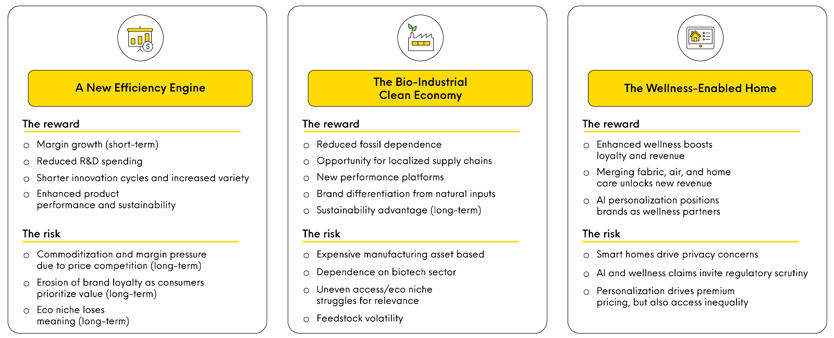
In the first scenario, AI becomes the new efficiency engine, simulating ingredient combinations and optimising formulas for performance, cost, water, energy and sustainability. The role of the lab shifts from broad experimentation to verification and refinement.
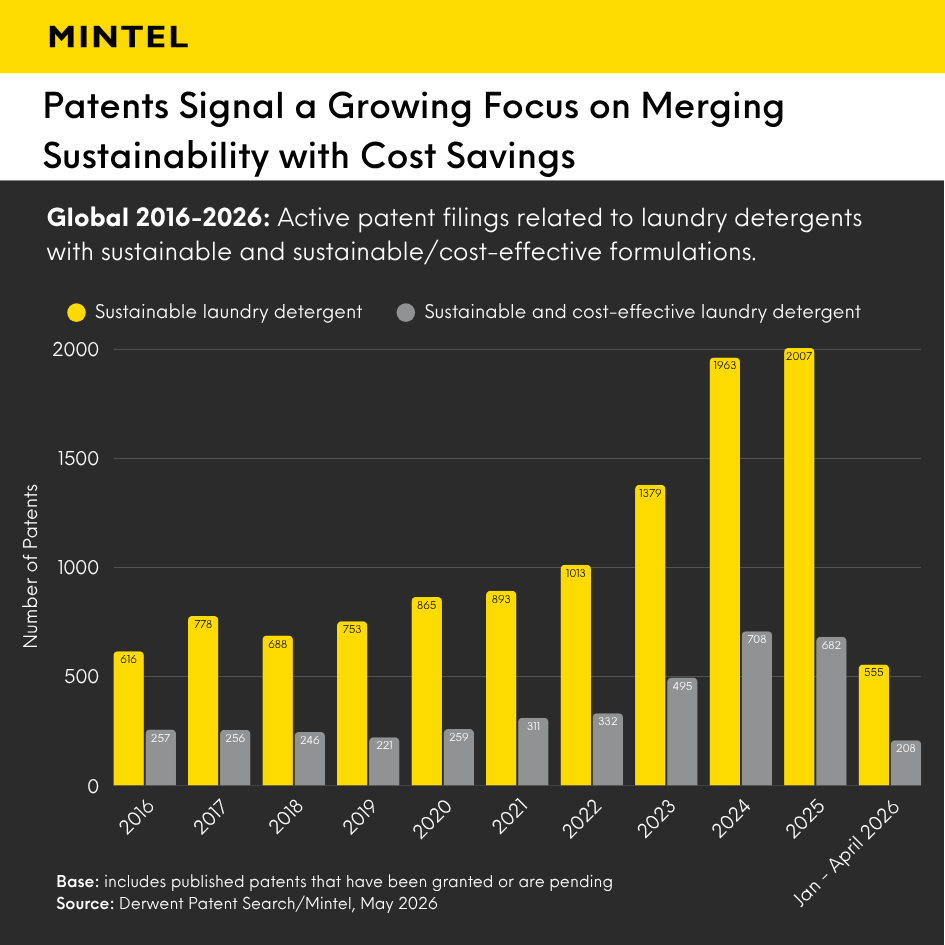
Patent activity already points towards this shift, with sustainability and cost effectiveness increasingly converging. Sustainable laundry-detergent patents rose from 616 in 2016 to 2,007 in 2025, while patents combining sustainability and cost effectiveness increased from 257 to 682 in 2026 (client-access only).
This convergence was already visible in laundry care. For years, washing clothes in cold water meant a trade-off between sustainability and cleanliness. But looking back to 2026, a new wave of formulary innovation foreshadowed powerful, eco-friendly detergents that could work effectively in frigid temperatures.
- P&G took a biological route with a patented protease enzyme derived from Bacillus subtilisin. This ensured stability in water as cold as 5°C, delivering cleaning power where traditional enzymes fail.
- China Daily Chemical Research Institute developed a super-concentrated, low-freezing-point detergent from plant-derived materials, which remained effective at an impressive -10°C without gelling.
The benefits extend to both consumers and brands. Consumers benefit from better cold-water cleaning, shorter cycles, lower residue and reduced water and energy bills. For brands, the same tools could narrow performance gaps between leaders, challengers and private label (client-access only).
There’s a risk of commoditization
Yet as formulation platforms standardise, a strong formula may no longer justify premium pricing. Differentiation will depend on proprietary data, better training sets, exclusive ingredient access, and links between formula design, procurement and manufacturing.
Brands should align AI and supply-chain strategy. An algorithm that identifies the ideal enzyme or polymer has limited value if procurement cannot secure it at scale. The strongest systems will optimise for availability, regulation and cost volatility, not just performance.
Scenario Two: Biotechnology Could Move Innovation Upstream
The evidence: Ingredient production is becoming programmable
The second scenario shifts competition from finished formulas to the systems that create their ingredients. Synthetic biology and fermentation can produce enzymes, biosurfactants and microbial cleaning agents with benefits tailored to cold water, hard water, mildness or environmental performance.
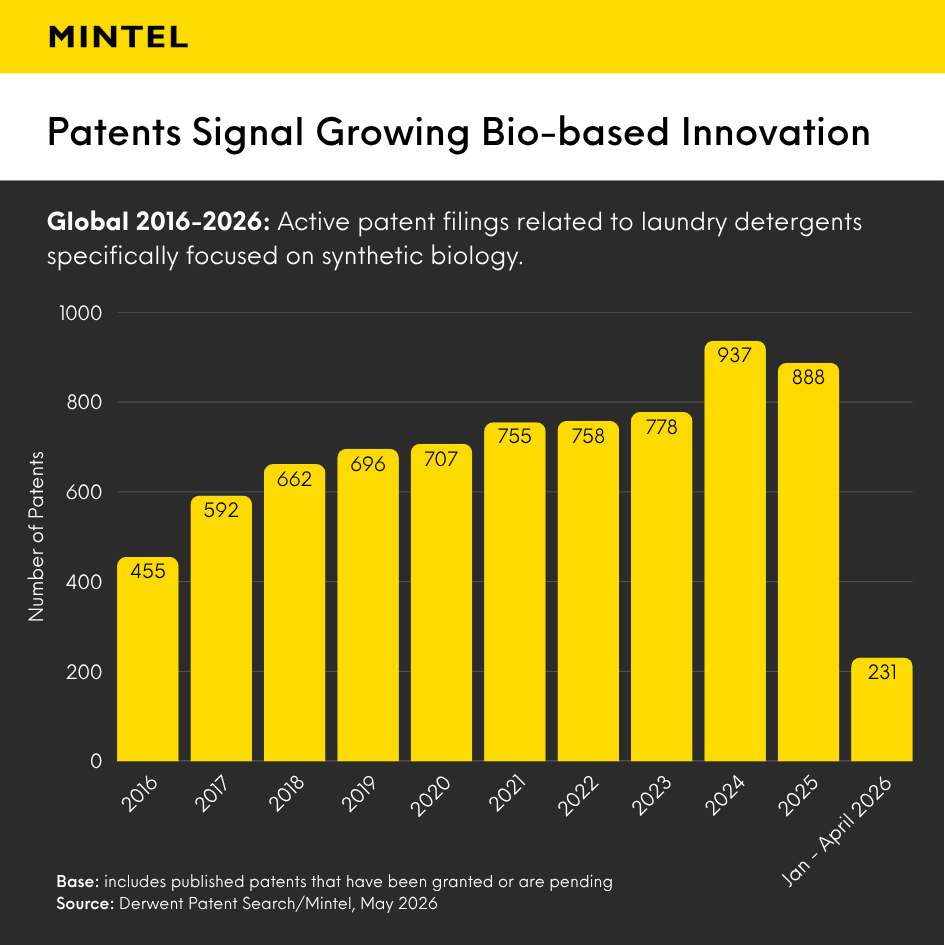
Patent activity related to synthetic biology in laundry detergents rose from 455 in 2016 to 937 in 2024, remaining high throughout 2025/26. Patent filings increasingly focus on engineered enzymes, fermentation yields, bioreactor design and biologically derived surfactants.
Biosurfactants offer a natural alternative to traditional cleaning agents. An invention from Locus Solutions used biosurfactants such as sophorolipids to tackle hard-water problems. Derived from microorganisms, these substances prevent salts such as calcium and magnesium from forming solid deposits, resulting in clearer water and more effective cleaning.
This points to a future in which control of the production platform matters as much as ownership of the finished formulation.
Regional fermentation could reduce dependence on petrochemicals while creating more adaptable supply networks. It could also enable producers to use a wider range of agricultural side streams and local feedstocks.
Pioneers such as Univ Quantum have set a new benchmark by combining fermented agricultural waste, including orange peels and sugarcane bagasse, with microbial strains to produce high-performance bio-enzymes. This approach repurposes waste, reduces pollution and supports a circular economy.
Another risk: agricultural volatility and new competitors
Bio-industrial production does not eliminate supply risk. It replaces petroleum exposure with new dependencies on agricultural feedstocks, fermentation capacity and biological intellectual property. While not as volatile as petroleum, agricultural inputs remain vulnerable to drought, crop disease, energy costs and geopolitical disruption.
It also creates new competitors. Biotech firms that master ingredient performance may move downstream into branded fabric care. Established players must decide which capabilities to build, acquire or secure through long-term partnerships. They should also create contingencies for the possibility that a critical supplier chooses to compete directly.
Scenario Three: Wellness Could Bring Formulation into the Home
The evidence: Laundry benefits are moving beyond clean
The third scenario extends product development beyond the factory. Smart washers, sensors, air purifiers and connected dispensing systems could coordinate fabric care around skin sensitivity, allergens, fabric type, water conditions and household routines.
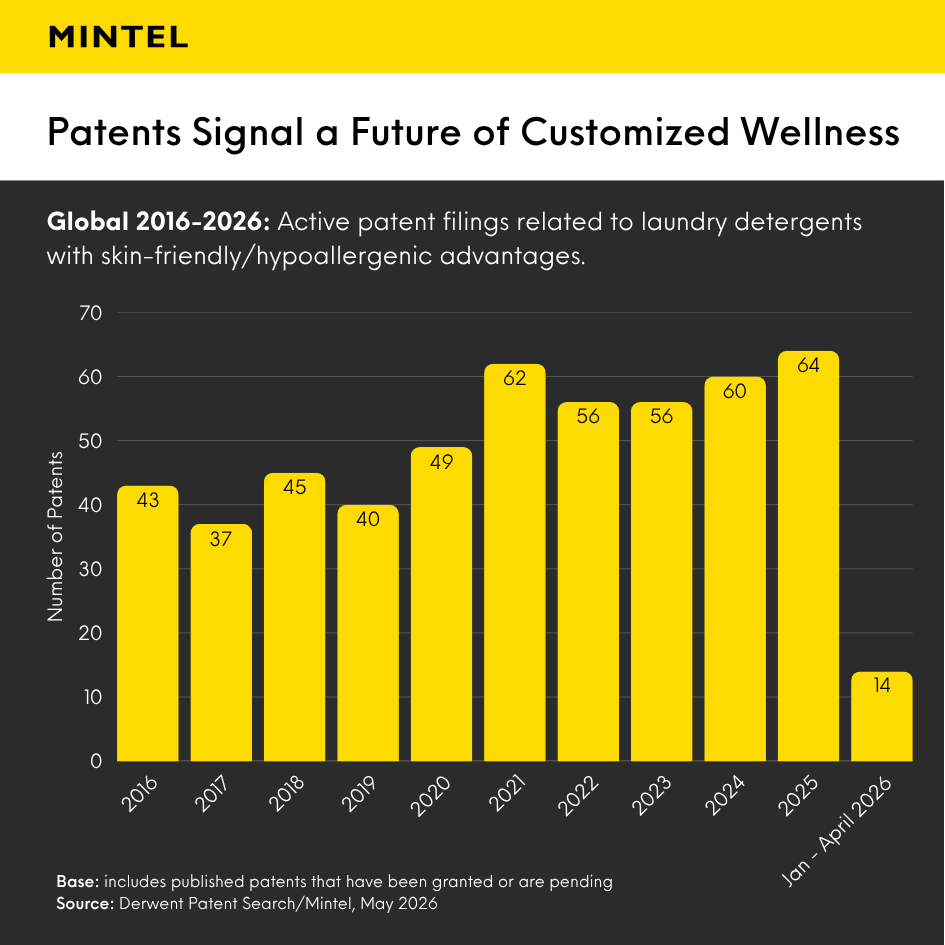
Patents for detergents with skin-friendly or hypoallergenic benefits rose from 43 in 2016 to 64 in 2025. Other filings cover antimicrobial fabrics, allergen-reducing polymers, probiotic treatments and ingredients designed to support skin hydration or the microbiome.
One example is CONOPCO’s PCT publication, which features a detergent with active polysaccharides such as pectin and resistant maltodextrin. These transfer to the skin during wear, upregulating genes vital for skin regeneration, hydration and barrier function. This mirrors Reckitt’s investment in bio-based delivery systems for wellness.
For those managing eczema, Sanipak Saglikli Yasam Ueruenleri Sanayi offers a specialized textile cleaner. It combines juniper tar, a natural eczema-soothing ingredient, with plant-derived surfactants. By avoiding harsh chemicals, it ensures safe, gentle care while protecting fabric color. This is reiterated by P&G’s advances in creating detergents with better skin compatibility and allergen-reducing properties.
Together, these patents mark a transformative shift in how we think about laundry, creating a path for fabric care to become part of a broader wellness ecosystem. By integrating hydration-boosting polysaccharides and eczema-soothing juniper tar these formulations prove that effective cleaning and skin wellness can seamlessly coexist.
Another risk is that personalisation requires trust. While the opportunity is stronger loyalty and new premium benefits; the risks are privacy, cybersecurity, complexity, unequal access and tighter scrutiny of wellness claims.
What’s more, few fabric care brands can build this alone. They will need appliance, technology, air-care, skincare and possibly healthcare partners, while ensuring data ownership, consumer control and the evidence needed to support credible wellness claims.
What Should Brands Do Now?
These scenarios point to varied futures and practical moves brands can take now: involve sourcing earlier in R&D, build partnerships outside the category and identify which capabilities should remain proprietary.
- Test innovation pipelines against commoditisation, feedstock disruption and smart-home convergence.
- Identify priority partners across AI, biotech, manufacturing and appliance ecosystems.
- Clarify how the brand can stay distinctive as performance, sustainability and affordability become easier to replicate.
- Monitor signals including water restrictions, biotech investment, ingredient shortages, wellness regulation and appliance interoperability.
The aim is not to predict a single outcome, but to create a strategy that remains relevant as pieces of all three scenarios take shape.
Prepare for What’s Next in Fabric Care With Mintel
Three futures. Three very different playbooks. Yet one truth unites them. No single technology will decide the winner of fabric care by 2040. AI will accelerate formulation. Biotechnology will rebuild supply chains. Smart homes will personalise wellness. The brands that thrive will prepare for all three at once, using scenario planning to spot the no-regrets moves that succeed whichever future unfolds.
We predict the boundary between fabric care, appliance technology and personal wellness will dissolve. Detergent will no longer be a standalone product. It will become one node in a connected system of clean. That shift rewards partnership over isolation. Brands must collaborate with AI providers, biotech firms and appliance makers now, before these ecosystems lock in around early movers.
Mintel scenarios help you turn patent signals, competitive intelligence and consumer shifts into confident strategy. These scenarios map emerging technology to commercial opportunity, so you can invest with clarity rather than guesswork.
Mintel clients can access the full On-demand report Emerging Tech to Reshape Fabric Care: Three Scenarios behind this article for deeper analysis, patent data and strategic recommendations.
Interested in getting the latest insights into the technology redefining consumer behaviours and an early look at the innovation signals worth watching? Subscribe to Spotlight today for original thinking from our Principal Strategists.