While big tech is betting big on agentic disrupting the shopping journey, a trust gap exists for consumers between AI-assisted search and automated purchasing.
Agentic commerce is the next buzzword in retail. Backed by major AI players and seemingly an army of cheerleaders on LinkedIn, who are looking to use the technology to capitalise on the adoption of AI-assisted search to fully own the purchase journey.
While the technology is advancing fast, few have asked if shoppers are ready to embrace it and the evidence is that consumer readiness is not keeping pace. It is critical brands understand this as the cost of AI-tech keeps rising.
Willingness to embrace automated purchasing differs significantly by geography, but the tension is clear: consumers are comfortable using AI to search, compare and simplify decisions, but far less willing to let it act on their behalf.
This creates a critical divide between what agentic commerce can do, and what consumers will allow. The result is a future channel to market shaped not by tech capability, but by trust.
Successfully leveraging agentic capabilities is not about how advanced the technology is, it is about who can bridge this trust gap, combining AI-driven convenience with trusted expertise.
This means the opportunity is clear for brands and retailers to lead in creating new experiences underpinned by the technology, ensuring investment is well placed and brands can ‘own’ the disruption.
AI Search is Rewriting How Purchases Begin
We’ve seen how quickly AI chat tools have disrupted the search landscape, in turn creating an environment where discovery of products is more quickly collapsing into purchase.
The level of disruption is dependent on how quickly a geography have embraced AI in day-to-day life, with the US and China taking the lead.
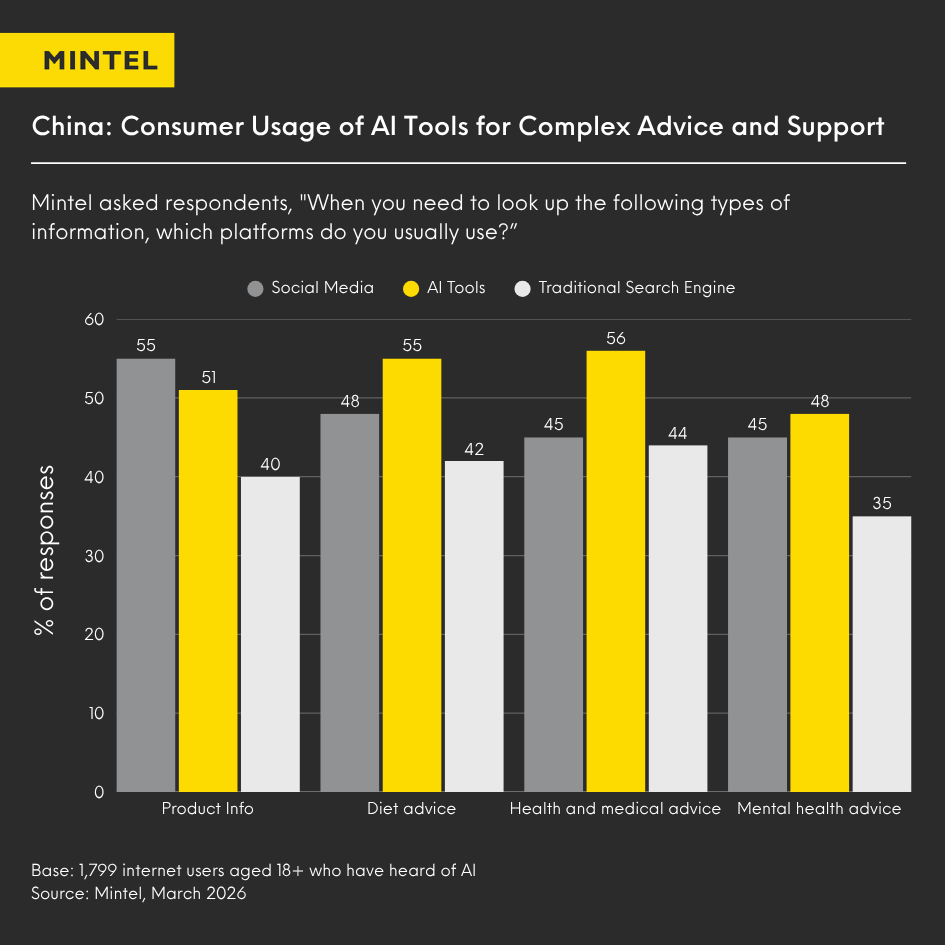
It has been remarkable to see how quickly AI tools have become a tool for many consumers for more complex areas of advice, such as medical and mental health support.
In theory, if consumers trust AI to give out such advice, it follows that they should be trusting of agents purchasing on their behalf.
However, there is a significant difference between being served information that can be scrutinised and compared against other sources, and ultimately discarded, and giving autonomy to AI to purchase on your behalf.
For brands and retailers, it is important to understand that the behaviours we are seeing in search are not, despite what many tech companies are saying, directly transferable to agentic commerce.
The Biggest Hurdle to Automated Purchasing is Trust
The jump to allowing agents to not only surface products and services but automatically buy them is large.
Despite what many commentators may think, many people enjoy the ritual of shopping and the thought of removing this pastime is simply a non-starter for many consumers the world over.
We are not all so busy creating grand AI-empires that we want to forgo the pleasure of going to the shops.
Of course, some would gladly give over control to certain shopping tasks, meaning the opportunity for agentic commerce varies by category and mission.
Consumers are far more comfortable with the idea of agents automatically purchasing regular functional purchases, such as household goods, than they are with more personal and emotive categories like beauty and fashion.
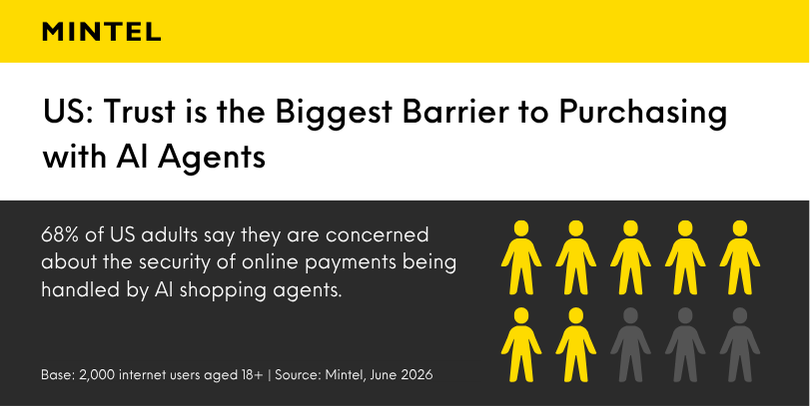
There is one overarching issue that tech platforms need to overcome to own more of the shopping journey: the safety of agents automatically handling online payments.
Over two-thirds of consumers in the US (client-access only), a market where comfort in automating purchases is higher, are concerned about the security of agents making online purchases.
This is a concern held irrespective of age, income, or region, and unless managed means the addressable market for true third-party agentic commerce will remain small. Even if you dislike shopping, you probably value ensuring your bank account remains secure.
Shoppers Will be Convinced if Convenient
Agentic commerce will succeed or fail on one factor: convenience. If it is not faster, simpler or more accurate than existing behaviours, it will not scale or find more than a niche home in the retail landscape.
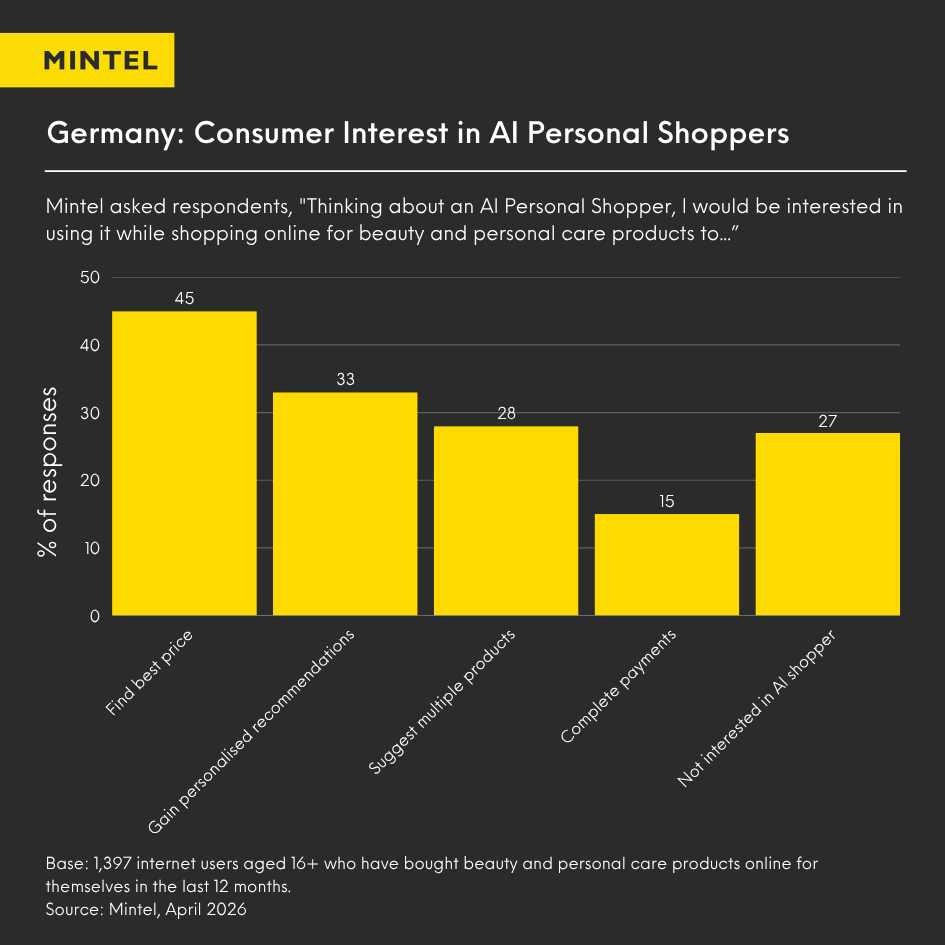
Indeed, the key features desired by shoppers of an agent, or AI personal shopper, are all convenience based.
AI-search experience has shown consumers that AI tools are adept at finding the best prices or personalising recommendations, if they can be convinced full checkout is also more convenient than traditional means then there is the foundation for agents to disrupt the market.
However, that is where the early iterations of agentic commerce have fallen down.
Announced to much intrigue in 2025, Checkout in ChatGPT simply couldn’t match the level of convenience of a retailer’s site, with the decision for the likes of Walmart to walk away from Checkout due to lower levels of conversion. Conversely, Amazon is reporting Rufus, it’s in platform AI assistant, ups conversion by over 2.5x.
The Power Remains with Retailers and Brands
While AI platforms may harbour interest in controlling more of the purchase journey, unless they decide they wish to funnel some of the immense capital they are spending on AI infrastructure into warehousing, logistics and brand partnerships, then they need retailers.
On the evidence to date, why would retailers or D2C brands give up control of the shopping journey?
The reality is it is brands and retailers which will control to the power in the market in the medium term, and who are most likely to successfully leverage agentic tech to create new opportunities.
That is because they already have the full foundations that agentic commerce must be built on: expertise, convenience and trust.
Retailers, such as Ulta, and brands, such as L’Oreal, have already successfully used AI to create elevated experiences, but the power of agentic technology is better knitting together on offerings to create a true new elevated way to shop.
Tesco’s current internal trial of a new ‘AI assistant’ which combines its recipe site and groceries online into a new mission-based way to shop the retailer is the exact type of new thinking we can expect to see in the short-term.
Rather than agents shopping for us with a third-party, the true disruption we can expect to see in the short-term is those already with power in the retail market using agentic technology to create new ways to shop, elevating service, personalisation and convenience of shop to keep shoppers in-platform and keeping up with modern expectations of shopping online.
Success in Agentic Commerce Depends on Brands Building Trust
Rather than an industry revolution, the disruption from agentic technology will be a slow evolution of consumer expectations and the online purchase journey.
How quickly this evolves will be based on category and geography, and crucially how quickly agentic commerce overcomes key friction points and demonstrates how it can improve the current e-commerce experience.
- Trust remains the decisive barrier.
Consumers are willing to accept AI guidance, but many remain hesitant to grant agents control over transactions, particularly in categories where purchases are personal, emotional, or higher risk. - Convenience is the ultimate proof point.
Agentic commerce will only gain mainstream traction if it demonstrably saves time, reduces effort and improves outcomes beyond what existing shopping experiences already offer.
Early experiments with full AI-based checkout show that brands and retailers start from a position of strength in both areas. Retailers have the logistics and know-how, and their existing relationships, expertise and consumer trust position them to integrate agentic capabilities in ways that feel credible, useful and safe.
The next phase of innovation will center on retailers and brands embedding agentic capabilities within their own ecosystems, creating more personalised, mission-based and frictionless shopping experiences.
Those brands which are bold and look to rewrite how their online operations function to utilise the disruptive potential of agentic AI will find a consumer base that is intrigued but needs convincing.
If the experience adds convenience and additional levels of service, then it will connect and leave those willing to make the investment at the forefront of a new wave of online retailing.
Mintel clients can access the full Agentic Commerce insight report behind this article for deeper analysis, category data and strategic recommendations.
Interested in receiving insights into the trends redefining consumer behaviours and get the first look at the innovation worth watching? Stay in the know, with original thinking from our Thought Leaders by subscribing to Spotlight today.