
When it comes to chocolate, the Indian consumer palate has been attuned to the milk variety. However, due to increasing health awareness coupled with exposure to Western taste profiles, Indian consumers have started experimenting with dark chocolate. In fact, Mintel research indicates that one in ten Indians have switched from eating regular milk chocolate to dark chocolate.
As a result, a slew of local brands specialising in fine and dark chocolates have emerged and are redefining the fine chocolate market for the Indian consumer. Kocoatrait is a particularly interesting brand due to the recent launch of what it calls the world’s first zero-waste and sustainable bean-to-bar craft chocolate.
The brand uses organic cocoa beans from India and organic non-refined muscovado (khandsari) sugar and doesn’t use any artificial flavours or oil. It offers 10 unique flavours in 64%-91% dark chocolate options.
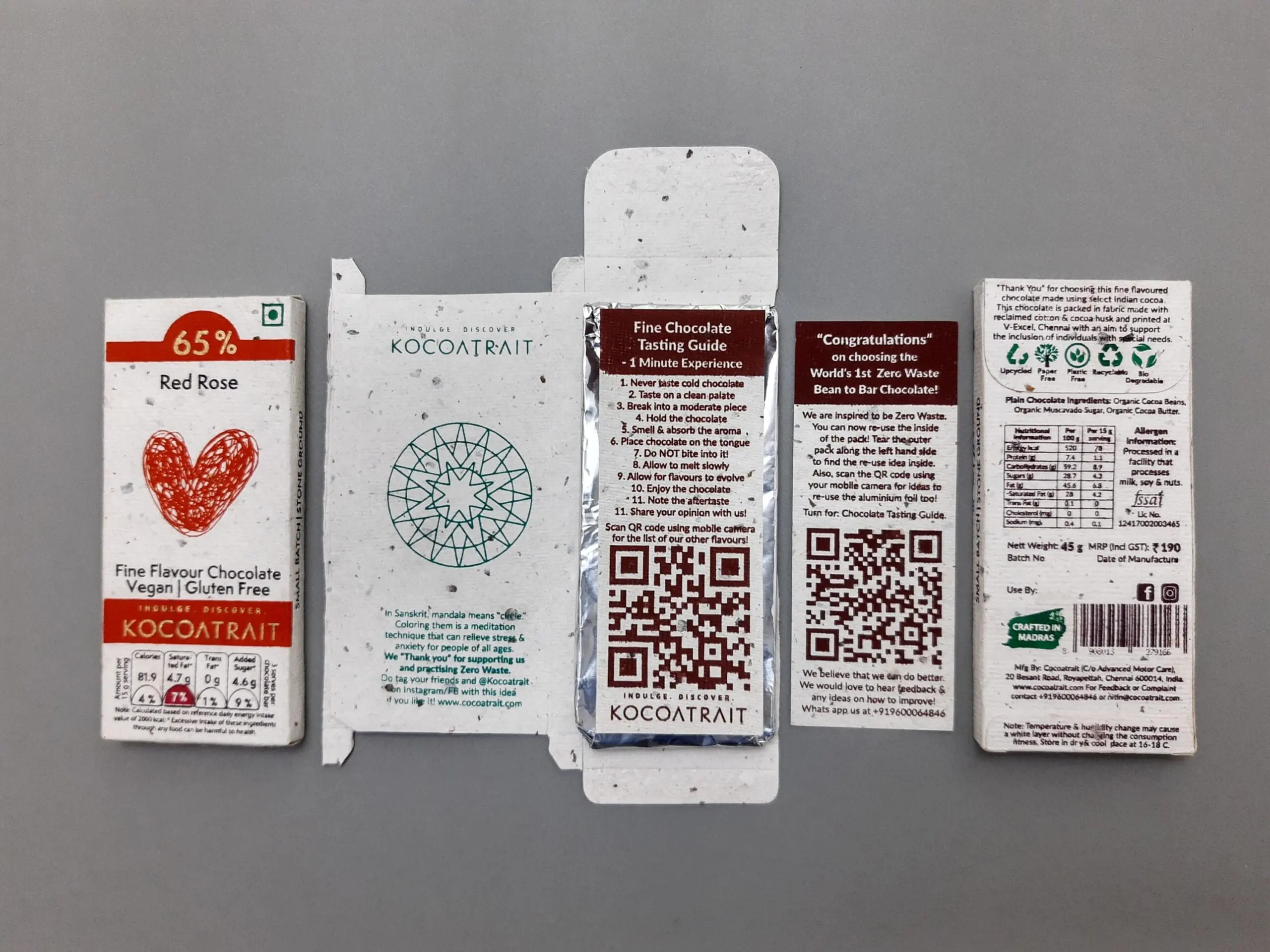
The most interesting aspect and a point of differentiation for Kocoatrait is its packaging, which is said to be zero waste. It’s free from paper and plastic and is made from reclaimed cotton and cocoa husk and, therefore, recyclable, biodegradable, and compostable.
Moreover, in order to encourage consumers to hold onto the wrapper after removing it from the product, the inner side of the packaging features Mandala art templates, meant to be therapeutic; a habit tracker, a greeting card template, and an emergency contact card format. This gives the wrapper, which otherwise would end up in a dustbin and eventually in a landfill, a longer post-purchase life.
 Source: cocoatrait.com
The zero-waste movement
Kocoatrait’s zero waste packaging is in line with Mintel’s 2030 Global Food and Drink Trend ‘Change, Incorporated’ which predicts that brands big and small will establish results-oriented activist approaches and lead change on important environmental and public health issues over the next decade.
Indian consumers are realising the impact of environmental issues on their life. Be it the apocalyptic air in Delhi or water shortages in major cities, in the years to come, as consumer consciousness towards these issues intensifies, consumers will not only change their habits and behaviours to adopt sustainable practices but also favour companies that champion the ethical and environmentally-responsible causes. In fact, Mintel research highlights that two in five Indian consumers agree that food/drink that supports the conservation of the environment is an important factor.
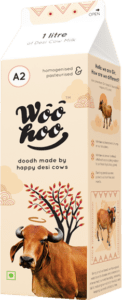
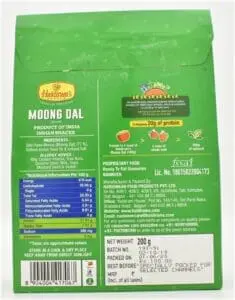
Thanks to the regulatory push, companies in India are starting to make eco-conscious efforts to make packaging recycle-friendly. One company doing this well is dairy brand Woohoo Doodh. It has introduced fresh milk in a gable-top container as opposed to a plastic pouch and it runs an initiative to collect these gable-top containers for recycling. The brand claims to have eliminated 1,000,000 plastic pouches with this effort. Another Indian brand, Haldiram’s has taken to on-pack communication to highlight its efforts for reducing carbon emissions through the use of solar energy at its factories.
 Source: woohoodoodh.com
 Source: Mintel Global New Products Database
What we think
In times of increased environmental consciousness, brands are finding avenues to improve the sustainability quotient of their product, packaging, and supply chain. While Indian government agencies ramp up efforts to curb plastic pollution and contemplate a ban on single-use plastic, it is incumbent upon companies to innovate with alternative packaging materials that are environmentally-friendly. Furthermore, the efforts that brands put into making packaging more sustainable can be leveraged to achieve shelf differentiation with on-pack claims and build brand equity.