Until 2014, the sugar confectionery market in China saw positive volume growth, however 2015 marked a turning-point. According to Mintel research, the market saw volume sales decline between 2015 and 2016 and this is forecast to continue until 2020. The two main reasons for this are slowing economic growth and consumers’ increasing concerns about sugar intake.
However, health concerns have contributed to the robust growth of functional candy, such as throat-soothing or vitamin C candies.
Innovation based on demographic needs can help market growth
In the six months leading to August 2016, while three in four Chinese consumers consumed gum and three in five ate mints, 45% of these consumers have eaten functional candy – reflecting an opportunity for the sub-category.
With manufacturers concentrating mostly on throat-soothing candy and vitamin C or calcium enriched candy, the variety of functional candy available in the Chinese markets remains limited. As a result, there is potential for companies to consider developing more options to expand the market. Developing products based on the varied demands of different demographic groups could be a good strategy to implement.
For instance, we’ve seen the appearance of collagen in candy; collagen is a protein considered as a good supplement for anti-aging. Another example includes the use of iron in candy, already available in Japan and Taiwan. Iron is associated with good health and energy, is beneficial for skin complexions, and often taken to prevent anaemia.
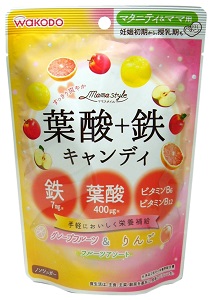
Grapefruit & Apple Flavour Folic Acid & Iron Candy (Japan)
This candy is designed for pregnant women, and claims to contain the recommended daily amount of iron, folic acid, vitamin B6 and vitamin B12 per two units.
Another potential opportunity for manufacturers is to target active consumers with functional candy that contains taurine as an ingredient. According to research from Mintel, nearly half of males and a quarter of females want to increase muscle mass and over two in five of those aged between 20 and 24 want to be in shape instead of slim. Thus, functional products that improve sports performance or build muscle may prove to be popular among these younger consumers. Some years back, Devilion in Germany launched a hard candy that contains both caffeine and taurine, and is said to taste like, and have the effect of, an energy drink.
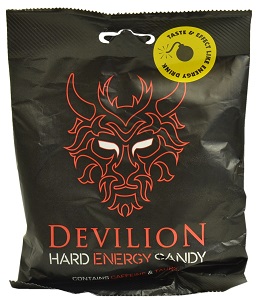 Hard Energy Candy (Germany)
The candy contains Nutriose soluble fibre, caffeine and taurine
Loris Li is a Food & Drink Analyst at Mintel and is based in the Shanghai office. Prior to joining Mintel, she worked in the wine and spirits industry for over six years, both in the US and in China.