More consumers are prioritizing plants including fruits, vegetables, grains and herbs in their diets, according to Mintel’s 2017 Global Food & Drink Trend ‘Power to the Plants.’ As the audience for plant-enhanced food and drink grows wider, there have been major developments in plant-based meat and poultry substitutes that look, feel and taste more like the ingredient they are made to replace. Replicating the experience of eating meat is, in essence, the goal of Impossible Foods. The Silicon Valley start-up is creating plant-based meat alternatives that are designed to cook and taste more like real meat than vegetable or bean-based meat alternatives.
More than 30 restaurants in the US feature the company’s beef alternative Impossible Burger on menus, including Andrea’s at the Encore Las Vegas. During the 2017 Institute of Food Technologist’s conference and trade show (IFT) this past June in Las Vegas, Mintel’s Associate Director of Food Science Stephanie Mattucci and Global Food & Drink Analyst Jenny Zegler visited Andrea’s to give it a try. The restaurant offers the Impossible Burger in the form of three miniature burgers, or sliders, with Asian-inspired condiments and sauces including kimchi and kochujang aioli.
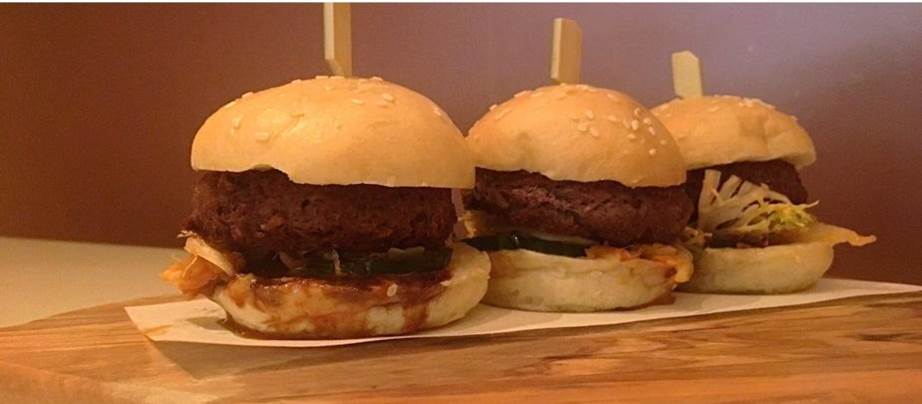
The Impossible Burger is made with a range of plant-based ingredients, including textured wheat protein, coconut oil and potato protein. The plant-based ground beef replacement also includes an ingredient called “heme,” which Impossible Foods says gives meat its smell, sizzle, bleed and taste. Impossible Foods has created a plant-based “heme” ingredient from soy (leghemoglobin) through fermentation. The company claims adding the “heme” ingredient provides a meaty flavor and helps the beef substitute change from red to brown and “bleed” when cooked, much like a beef burger.
The company’s dedication to creating a product that performs more like beef showcases that the audience for plant-based proteins is wider than just vegetarian and vegan consumers. One-third of US adults plan to buy more vegetarian or plant-based food products in 2016 compared with 2015. Indeed, more consumers are following flexitarian diets, which mean diets that include meat and dairy along with the occasional vegetarian or vegan meal. This flexible diet plan inspires consumers to seek out new forms of protein. For example, nearly a third of US adults who eat or use protein alternatives do so because they like to have “meat-free” days such as “Meatless Mondays.” Plant-based meat and poultry alternatives that cook and taste more like meat or poultry could expand the audience for plant-based protein.
To compare the plant-based beef to the real thing, Mintel analysts ordered the Impossible Burger sliders, as well Wagyu beef sliders. The side-by-side tasting showcased that the appearance of the Impossible Burger is more similar to beef than most other plant-based burger formulations. In addition to appearance, the Impossible Burger had a texture and bite that was closer to ground beef than most vegetable- or bean-based burgers.
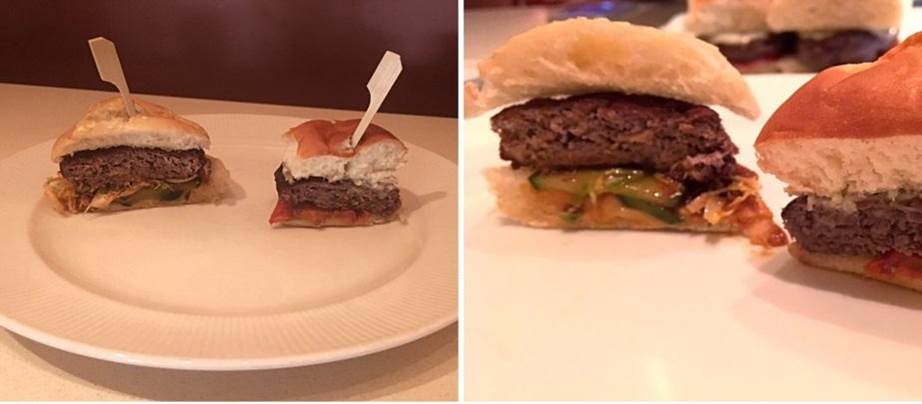
Although the two burgers looked similar, in this application, the Impossible Burger did not “bleed” as the company promises. This could be due to the fact that both burgers appeared to be cooked well done. In comparison to the premium Waygu beef burger, the Impossible Burger lacked richness and mouthfeel, which could be an unfair comparison due to the exceptional quality of Wagyu beef (a premium beef that is highly marbled and known for its melt-in-your mouth texture and superior mouthwatering, buttery yet beefy flavor).
While the Waygu beef was still juicy when cooked well done, the plant-based burger was dry. Even though the Impossible Burger was not as juicy as the Wagyu beef product, it would compare favorably to the texture and mouthfeel of lean ground beef. In addition, Andrea’s does a good job of addressing the lack of juiciness of the Impossible Burger through use of complementary umami-rich sauces including a kalbi sauce and kochujang aioli.
Overall, the Impossible Burger is not yet an undetectable substitute for beef, but it is the closest alternative that Mintel’s analysts have tasted thus far. They found the texture of the Impossible Burger comparable to a lean ground beef. With a bit more development around a fatty mouthfeel and incorporating more of a seared-beef flavor to the Impossible Burger, the formulation could attract more flexitarians and potentially carnivores.
Jenny Zegler is the dedicated trends analyst on Mintel’s Food & Drink platform, blending Mintel Trends expertise with food and drink specific topics, such as health and wellness, formulation, sustainability and premiumization. In addition to contributing analysis to Mintel Food & Drink, Jenny has been part of the team that creates Mintel’s annual cross-category trends since 2014.
Stephanie Mattucci is an Associate Director of Food Science at Mintel. Prior to Mintel, Stephanie worked as a Food Scientist in R&D for an ingredients company in Chicago, where she specialized in seasoning product development and provided technical expertise to customers in the food industry.
About the Author
Mintel News
For the latest in consumer and industry news, top trends and market perspectives, stay tuned to Mintel News featuring commentary from Mintel’s team of global category analysts.
Related Insights