Mintel has been at the forefront of predicting the trends that matter most, calling them early and accurately, over the last 15 years. In our series, You Heard It Here First, we take a look at some of the predictions that we’ve made and where they are today.
Fitness has come a long way from being a half-hearted New Year’s resolution. From spinning to Crossfit, HIIT and yoga, there’s a class for every level and taste. Millennials are increasingly willing to skip post-work drinks for a weightlifting session; meanwhile, Instagram is flooded with gym selfies and workout routines.
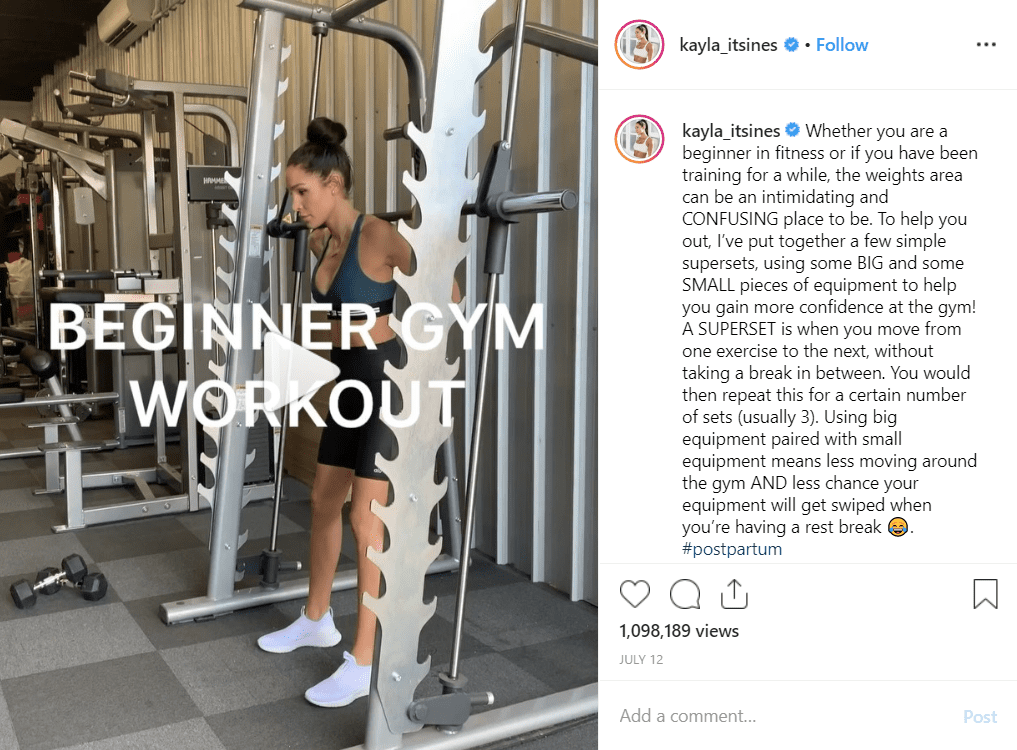
 @kayla_itsines, a personal trainer with over 11 million Instagram followers
But a decade ago, the health and fitness market looked very different to the one we see today. The financial crisis had hit the industry as people cut back on non-essentials, like a gym membership. Big box clubs were struggling and budget gyms were just about to take-off.
Back in 2009, Mintel predicted that in order to stay afloat, clubs needed to better target their membership base. We suggested that gyms which attracted a young single crowd should focus on social events geared around meeting other members and getting to know them better, or by running group exercise sessions in other locations (eg a community centre, in a local park) in order to broaden their reach. Few, if any of the key players picked up on this, which left room for a new breed of fitness operator: the boutiques. A boutique fitness studio is usually a small venue that focuses on group exercise and specialises in one or two fitness areas. Although the likes of Bikram Yoga and group outdoor classes like British Military Fitness have been around for a while, the move to a social style of fitness was yet to be seen.
The boutique invasion
Roll on ten years and there are hundreds of boutiques studios across the UK for all types of fitness fan. Australian boutique fitness chain F45 only entered the UK market in 2017, but already has 56 listed on their website either open or due to be soon. Those that prefer a less intense workout, like pilates or barre, can visit one of Heartcore’s ten sites, while those seeking variety can pick from one of Frame’s 1100 weekly classes that range from HIIT and boxing to dance and yoga.
 Credit: Heartcore
 Credit:
 Many key players are aiming to replicate this style of boutique class fitness experience. Notable launches include David Lloyd with Blaze, a HIIT group workout within the club and The Yard at énergie Fitness. There’s space for more players to enter the market, as consumers still have a huge appetite for boutique studio brands. In an era where experience is king, people seeking fun and social ways to stay fit are almost spoilt for choice.
Creating a fitness community
So why are these classes, which work out far more expensive than a gym membership, so popular? It comes down to the social element that large gyms struggle to replicate. In fact, nearly two-thirds of UK adults that are or would consider being a private gym member agree that being part of a health and fitness community is/would be important to them, according to Mintel research on health and fitness clubs in the UK. In today’s society, which is very much driven by digital and online connections, personal connections are lost. More of us live away from our home town or even country, so finding a new type of community is highly sought. Which is why many consumers are happy to supplement their cheap budget gym membership with a few classes at a boxing or spin studio each month to get that community feel in an affordable way.
 Group training at F45 – credit: Time Out
 Group training at F45 – credit:
 The future: Socialising through technology
Looking ahead, the health and fitness market will continue to evolve as technology impacts the range and delivery of exercise and fitness. Boutiques will remain a popular choice for experience-seeking consumers that are craving socialisation, just as much as exercise. However, the community element will also be recreated in the comfort of our own homes. You only need to look at brands like Peloton to see how a group spin class can be delivered in a consumer’s living room – managing the contradictory task of delivering a communal, social experience… while being alone!
 Credit: Peloton
 Credit: Peloton
Although specific types of activities such as yoga and spin will remain popular, we will see growth in those that morph two styles together such as ‘barre boxing’. Mental health will also increasingly play a role, being a common reason for people to workout altogether. For instance, Rowbots is a new rowing studio in London with classes developed in association with mental health professionals to work customers “from mind to toe”.
 Credit: Rowbots
 Credit: Rowbots
Consumers will crave details on how exercise is impacting their health, so discreet, wearable trackers and skin sensors will become mainstream to offer individual, scientific metrics such as blood glucose and stress hormone levels. This will be used by some brands to create a competitive edge to classes and help increase motivation and ultimately retention.